
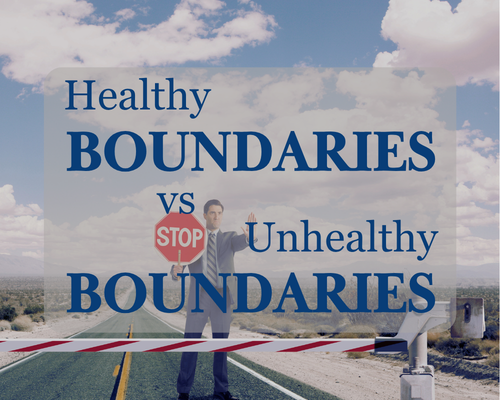
Supporting a loved one can be an act of love—but also stressful and exhausting. Families often feel torn between helping their loved one and protecting themselves. Understanding the difference between healthy and unhealthy boundaries is key for both your loved one’s recovery and your own well-being.

What Are Boundaries?

Healthy boundaries keep relationships safe, respectful, and supportive without pushing people away.

Healthy vs. Unhealthy Boundaries

“Here’s a clear comparison to help you recognize healthy and unhealthy patterns.”

Healthy Boundaries

 
Clear communication – Say what you can and cannot do. Example: “I can support you emotionally, but I cannot give money for harmful behaviors.”
 
Prioritize Self-care– Sleep, therapy, hobbies, and health come first.
 
Encourage accountability without enabling – Let natural consequences happen while supporting them
 
Consistency and predictability – Boundaries are firm, fair, and applied the same way every time.
 
Emotional separation from the problem – Care without taking responsibility for actions
 
Face reality with compassion– Acknowledge problems without denying them.

Unhealthy Boundaries

 
Vague or inconsistent – Changing limits based on guilt or pressure, sending mixed messages.
 
Neglecting your needs – Ignoring your well-being to focus entirely on your loved one.
 
 Over-involvement / rescuingConstantly shielding them from
consequences or trying to “fix” everything.
  
Inconsistent or reactive limitsFrequently breaking boundaries,
confusing your loved one.
 
Emotional enmeshment- Feeling their stress or sadness as your own, leading to burnout.
 
Avoidance or denial– Ignoring problems to keep the peace, letting harmful patterns continue.

Quick Tips for Healthy Boundaries

Know your limits – What can you realistically give?
Communicate clearly – Use simple “I” statements.
Stick to your boundaries – Even when it’s hard.
Seek support – Family Recovery Coach, therapy, family support groups, or counseling.
Focus on what you can control – Your actions, not theirs.
Be kind to yourself – Boundaries are self-care, not selfishness.

Final Thoughts

 
Setting boundaries doesn’t mean you love your family less. It means you care for them and yourself. Healthy boundaries keep relationships strong and supportive, helping everyone involved to thrive.
 
Resources
For personalized guidance and support, please reach out to Colleen directly.
Recovery Practices LLC
next right steps

Recovery isn't just about stopping something- it's about learning how to live well, one day at a time.

This simple daily guide is here to help you start your day calm, focused, and connected.

You have Successfully Subscribed!