
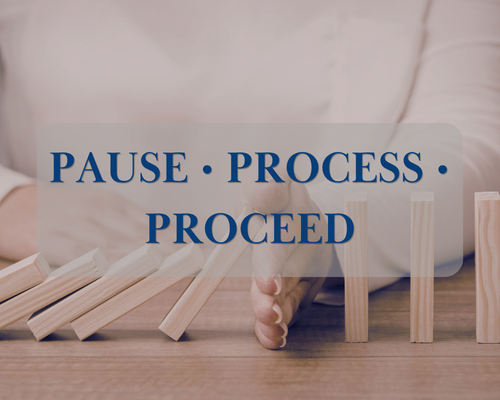
Pause • Process • Proceed
Tuning in Before Tensions Rise
Supporting someone with substance use, mental health, or behavioral health challenges can feel like walking a tightrope.
You want to help, but saying the wrong thing at the wrong time can make situations worse. That’s where Pause • Process • Proceed comes in—this simple, 3-Step approach helps you slow down, decide how or when to engage, and protect your own well-being.
Step 1: The Power of the Pause
The first step is simple but powerful: pause. Even a few seconds can help you notice your emotions and reduce the chance of escalation.
Try this:
- Count to ten or take three slow breaths
- Step away for a moment if you feel heated
- Remind yourself: “I want to respond, not react”
This could be a short pause of a few seconds, moments, hours or even a few days, depending on the situation.
Pausing lets you move from emotional survival mode into thoughtful decision-making
Step 2: Process Purposely
Before engaging, process what’s happening inside you. Ask yourself:
- What am I feeling right now—anger, worry, guilt?
- What outcome do I hope for—connection, honesty, or safety?
- What is actually my responsibility vs. theirs?
Processing can include journaling, talking with a trusted friend, or checking in with your values.
This step ensures your words are purposeful, not emotional reactions.
Step 3: Proceed Peacefully
Decide if and how you’ll address the issue. Sometimes the best choice is to wait; other times, speaking up is important.
If you proceed:
- Pick a calm time and place
- Focus on one topic at a time
- Use clear, neutral language (“I feel worried when…”)
- Set gentle boundaries as needed without blaming or shaming
If you pause further:
- Accept that some issues don’t need immediate discussion
- Protect your energy when engagement might escalate
- Know that waiting can be an intentional act of care
Pause • Process • Proceed vs. Reacting in the Moment
Thoughtful Approach
Pause: Stop, breathe, observe
Process: Reflect on feelings and intentions
Proceed: Speak clearly with purpose
Respect timing and boundaries
Accept what you can and can’t control
Reactive Pattern
Interrupting or speaking in anger
Acting on guilt, fear, or frustration
Blaming, lecturing, or over-explaining
Responding immediately, without thought
Trying to fix everything
Quick Tips for Using Pause • Process • Proceed
- One conversation at a time—don’t tackle everything at once
- Stay curious, not judgmental
- Boundaries are acts of love, not punishment
- Support yourself—your well-being matters too
Final Thoughts
Pause • Process • Proceed helps you take a step back, think clearly, set boundaries if necessary, and come back to the conversation with calm and intention.
